About the Project

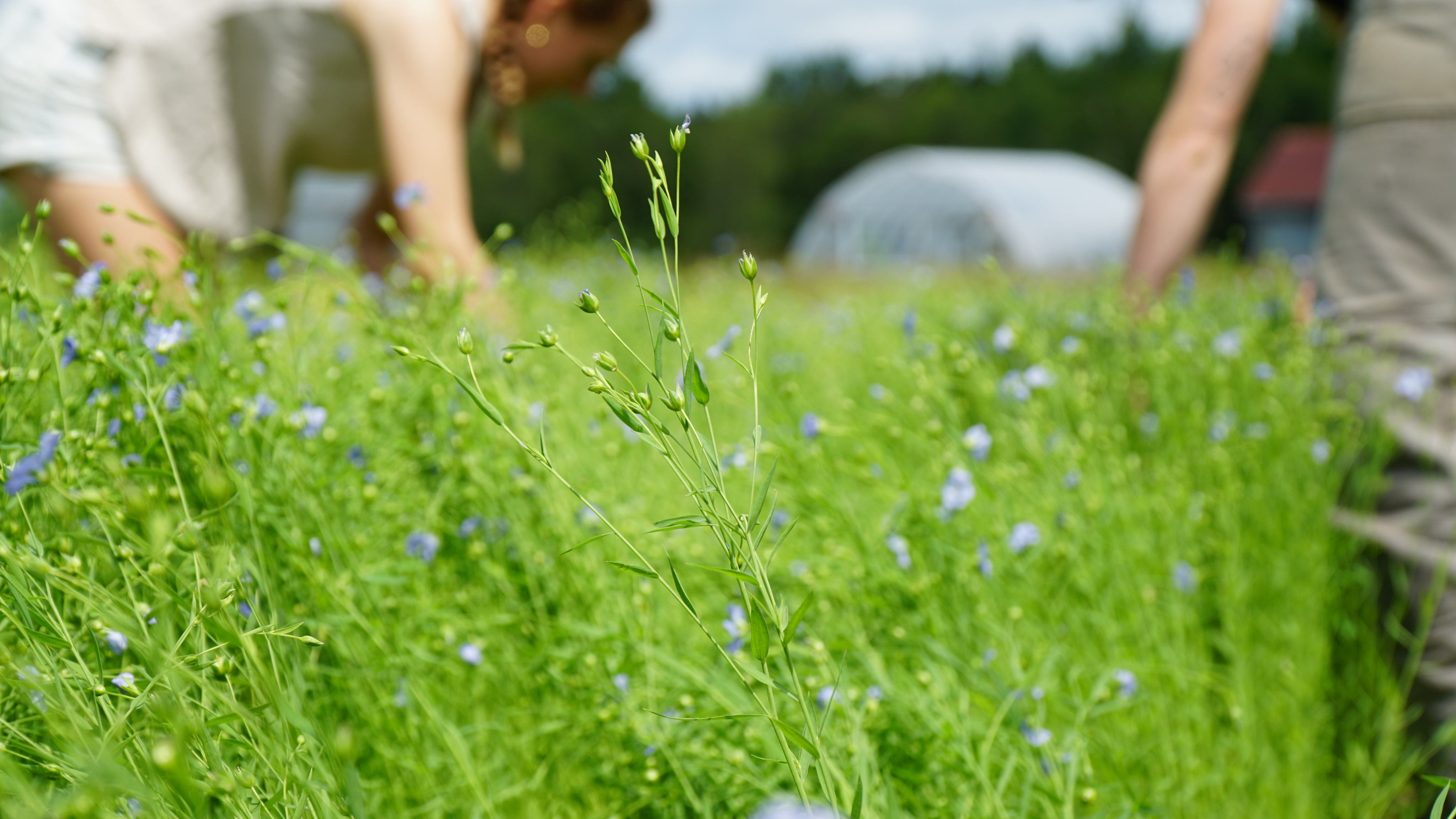
Flax plants flowering in a field

Project Summary

Flax Fibre to Fabric: An Innovative Transition Design Framework for Sustainable Agriculture Value-Chains promotes a circular local fibre flax industry in Atlantic Canada. Through trans-disciplinary and community-based research, the project broadens connections between farmers, processors, manufacturers, and artisans to support socio-cultural resilience and regional economic development through marketable value-added products.

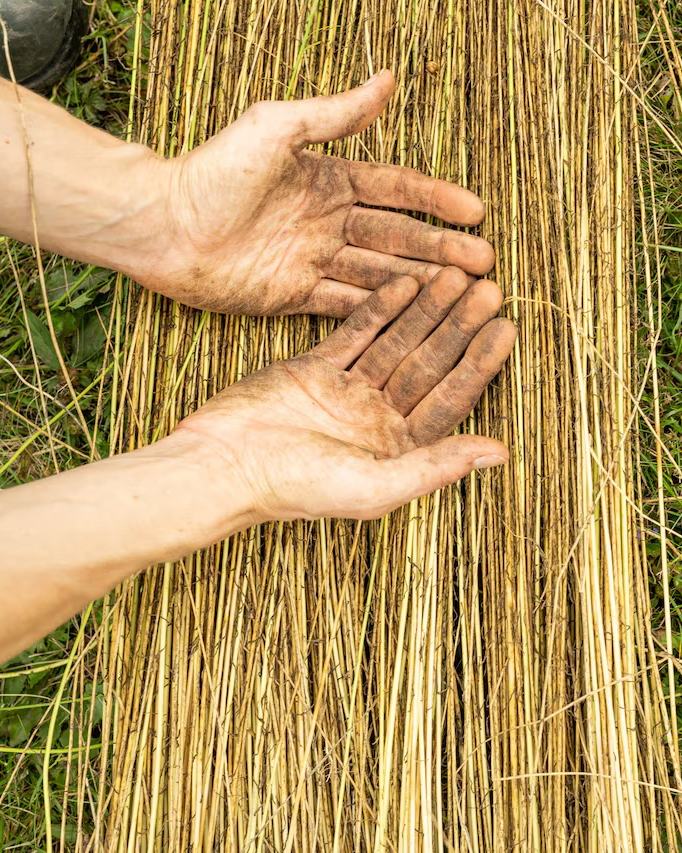
Hands holding flax stalksBundles of harvested flax

Acknowledgement

We are treaty people, engaged in the call to reconcile and remedy the harms, past and present, enacted upon African Nova Scotians and the Mi’kmaq People.

Land Acknowledgement

Much of this research takes place in Mi’kma’ki, on the ancestral and unceded territory of the Mi’kmaq People, who have lived in harmony with the land for centuries.

This project recognizes that Mi’kmaq material culture has a long and rich history that has faced erasure due to the impacts of colonization. We offer our respect and admiration to the Mi’kmaq knowledge keepers who work to recover and preserve all that has been suppressed or lost, and who nurture their heritage and culture into the future.

People’s Acknowledgement

We recognize the historical and contemporary presence of people of African descent and recognize that African Nova Scotians have existed and persisted on the traditional land of the Mi’kmaq for more than 400 hundred years.

This project recognizes African Nova Scotians as a distinct people with a rich material and cultural history and collective rights tied to over 52 land-based communities in Mi’kma’ki. Despite historical erasure, African Nova Scotians have and continue to take deliberate action toward healing and equity.

Research Questions

Q1

What is the achievable capacity for reduction in net greenhouse gas emissions through the establishment sustainable fibre flax production and practices in Atlantic Canada?

Q2

How could a regional network of growers, processors, and manufacturers be a source of valuable skill and knowledge in applied climate change mitigation and adaptation solutions?

Q3

What is the economic viability of a long line linen value chain in Atlantic Canada and what scalability goals of fibre flax production would support a secure path toward a net zero economy?

Project Objectives

  • Identify climate-smart agronomic practices that will optimize sustainable flax production and quality.
  • Design and create local and sustainable textiles and apparel with regional production systems that allow for the promotion and sharing of culture, heritage and skills.
  • Utilize industrial design for optimization of manufacturing and infrastructure in the regional longline linen supply chain.
  • Develop composite flaxcrete building materials for new and retrofit construction and quantify embodied carbon and GHG emissions reduction in pilot projects.
  • Prototype converted flax by-products as biochar for organic soil amendment and remediation applications to absorb both organic and inorganic contaminants.
  • Strengthen rural communities with an economically viable local long-line linen industry by defining a sustainable economy of scale for Atlantic Canada and shifting consumer behaviour to favour local textiles and investment in slow fashion alternatives and flax by-products.
  • Use Life Cycle Assessment to benchmark environmental performance, estimate GHG reductions, and outline a strategic plan for the future of regional flax, linen, and bio-composite manufacturing.
Blue flax flowers in a field

Industry Partners

Stanfield's logo

Stanfield’s Ltd

is Canada's leading manufacturer of woolen undergarments and apparel. Stanfield’s works with both long and short supply chains and understands their distinct opportunities and challenges. The Flax Fibre to Fabric project aligns with the company’s current activities and enthusiasm for collaboration and investment in local and small-scale designers, exploring sustainable apparel and manufacturing processes.

TapRoot Fibre logo

TapRoot Farms and Fibre Lab

is a leader in sustainable farming practices. Since 2012, they have carried out small-scale flax cultivation in the Annapolis Valley, developing the first long line linen processing machinery in North America, investing in a woolen spinning mill, and creating linen and wool yarns. Through a Nuffield International Farming Scholarship, TapRoot published a study that investigates the potential for Atlantic Canadian flax in regional and global markets.

Perennia logo

Perennia Food and Agriculture Corporation

is a provincial development agency that supports growth, transformation and economic development in Nova Scotia’s agriculture, seafood, and food and beverage sectors. Experts develop guides, fact sheets, videos, newsletters and media to advance skills for successful farming operations in the Maritime region. Commodity specialists provide producers with expertise and knowledge in field crops, horticulture, and livestock, and field research teams deliver on-farm extension and small plot research.

Fashion Takes Action logo

Fashion Takes Action (FTA)

is a non-profit organization that promotes sustainability in fashion systems through education, awareness, research, and collaboration. They work with stakeholders along the supply chain who make, sell, buy, and dispose of clothing. FTA is committed to collaborative research in sustainable textile and fashion systems, with a focus on shifting consumer behavior as an actionable step toward lowering GHG emissions and reducing waste.

Smart Prosperity Institute logo

Smart Prosperity Institute (SPI)

is a national research network and policy think tank at the University of Ottawa. Through their Clean Growth in Agriculture initiative, SPI is advancing practical policies and innovative market solutions to improve sector profitability, reduce unnecessary environmental impacts, and ensure accessibility across Canada’s agri-food systems. SPI has explored the development of standards for novel agricultural management systems and is currently engaged in identifying guiding principles for a farmer-led agricultural transition in Canada.

Habit Studio logo

Habit Studio

is a residential design practice located in Halifax. Since 2016, they have specialized in sustainable whole home renovations and Passive House (Zero-Energy) design for homeowners across Atlantic Canada. Habit Studio’s core activities include sustainable building practices, developing innovative technical skills, and investing in alternatives to conventional building materials and design. They actively seek alternatives to foam-based insulation and are positioned to collaborate in the design and manufacture of products such as flaxcrete.

The ReCover Initiative logo

The ReCover Initiative

is a non-profit organization dedicated to transforming Canada’s building stock through deep retrofit solutions. Pilot designs have demonstrated potential reductions in energy consumption and GHG emissions that could be achieved in retrofits for low-rise multi-unit residential buildings in Halifax. Approaches to energy savings include superinsulation and passive house retrofits, fuel switching of building mechanicals, and high-efficiency equipment.
Newsletter

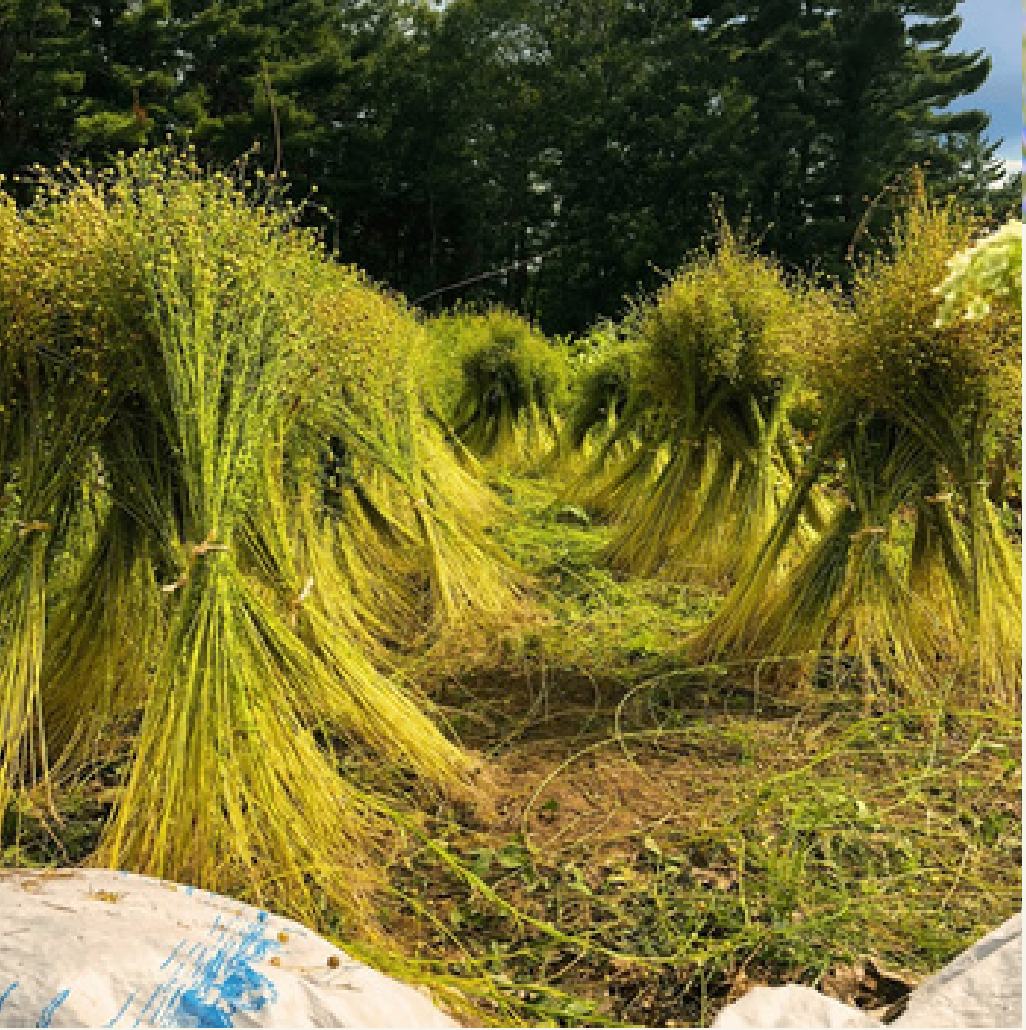
Bundles of flax standing in a field

MARCH 2026

The Flax Fibre Value Chain: Modelling for viability and growth

Ashley Doyle and Edith Callaghan, Acadia School of Business, are working with David Henry (CPA...

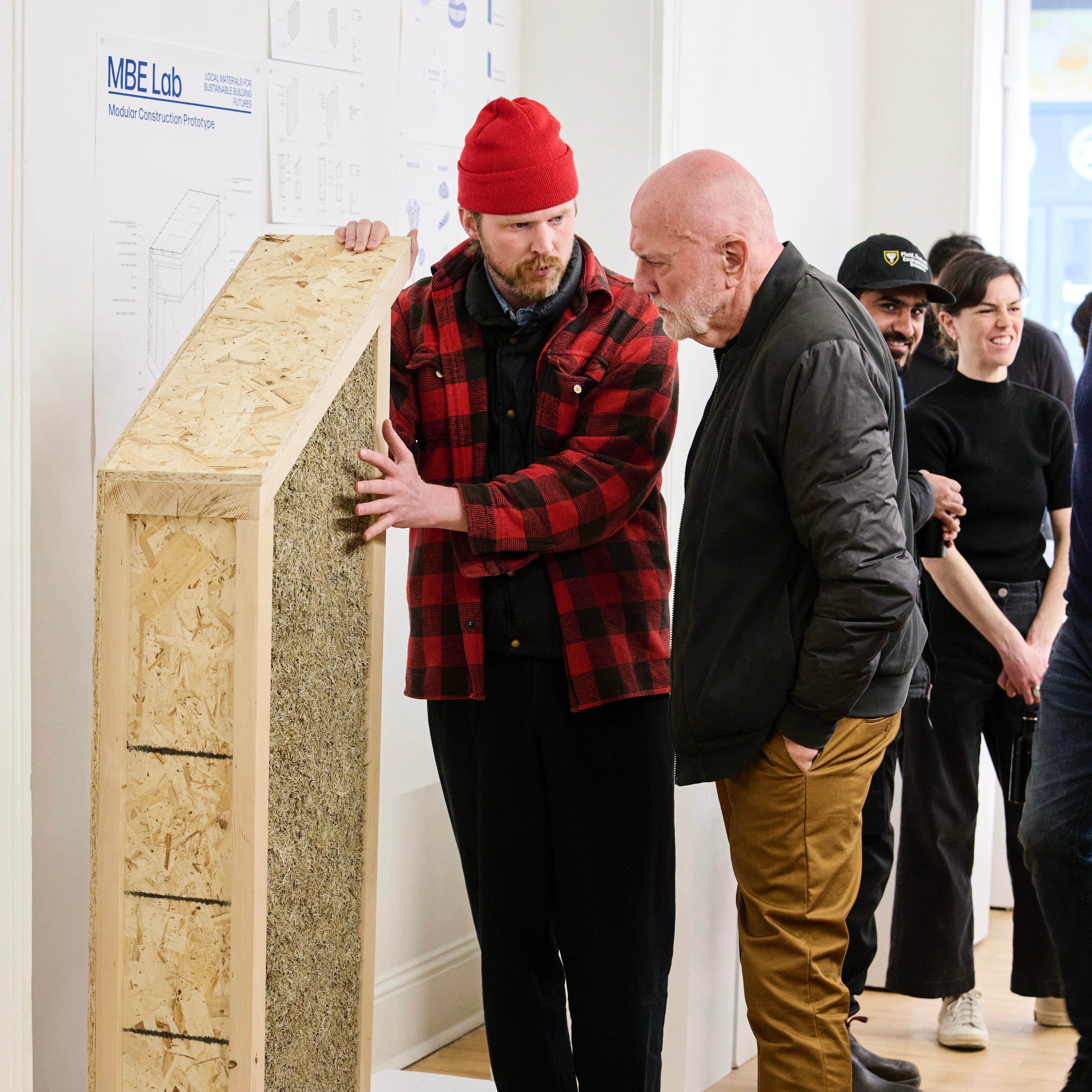
Team members examining a prototype wall panel

MAY 2026

Annual All Team Meeting

To mark the transition from year two to year three, the research team, along with industry...