Transition Design Research

Workshop notes on a transition design map

The Flax Fibre to Fabric Project is applying Transition Design, a problem-solving approach deeply rooted in systems thinking and living systems theory. Transition Design was developed by Gideon Kossoff and Terry Irwin at Carnegie Mellon University, along with Cameron Tonkinwise. Transition Design provides design-led tools to address complex problems and aid transdisciplinary shifts toward more sustainable futures. These tools include gathering data through community-based workshops as well as organizing and visualizing data through sensemaking activities and mapping.

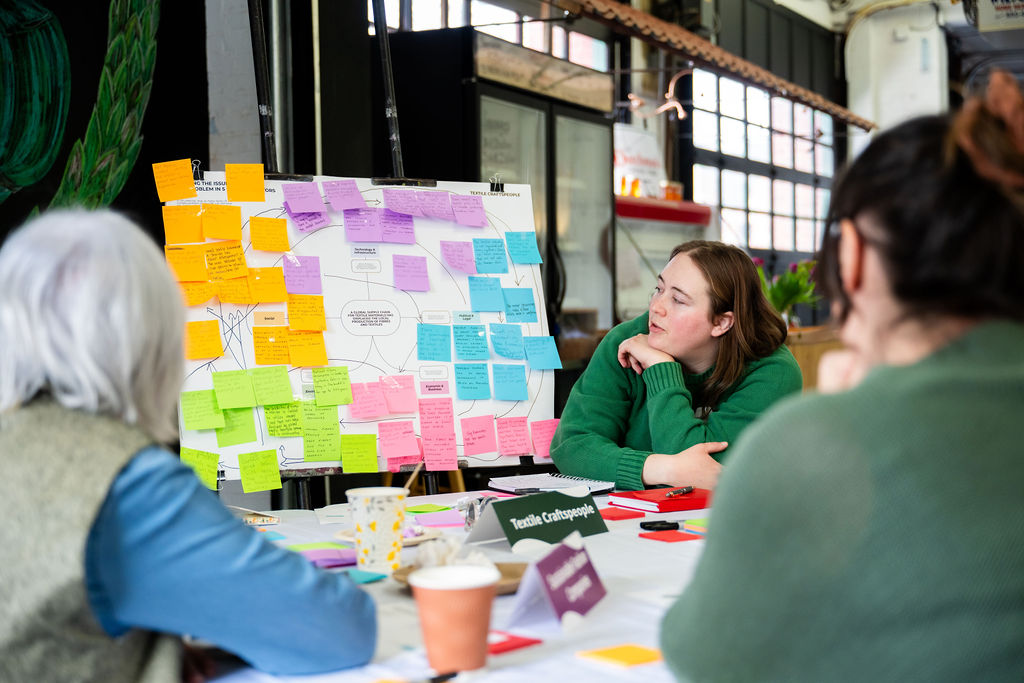
Participants reviewing a colourful community workshop map

Wicked Problem

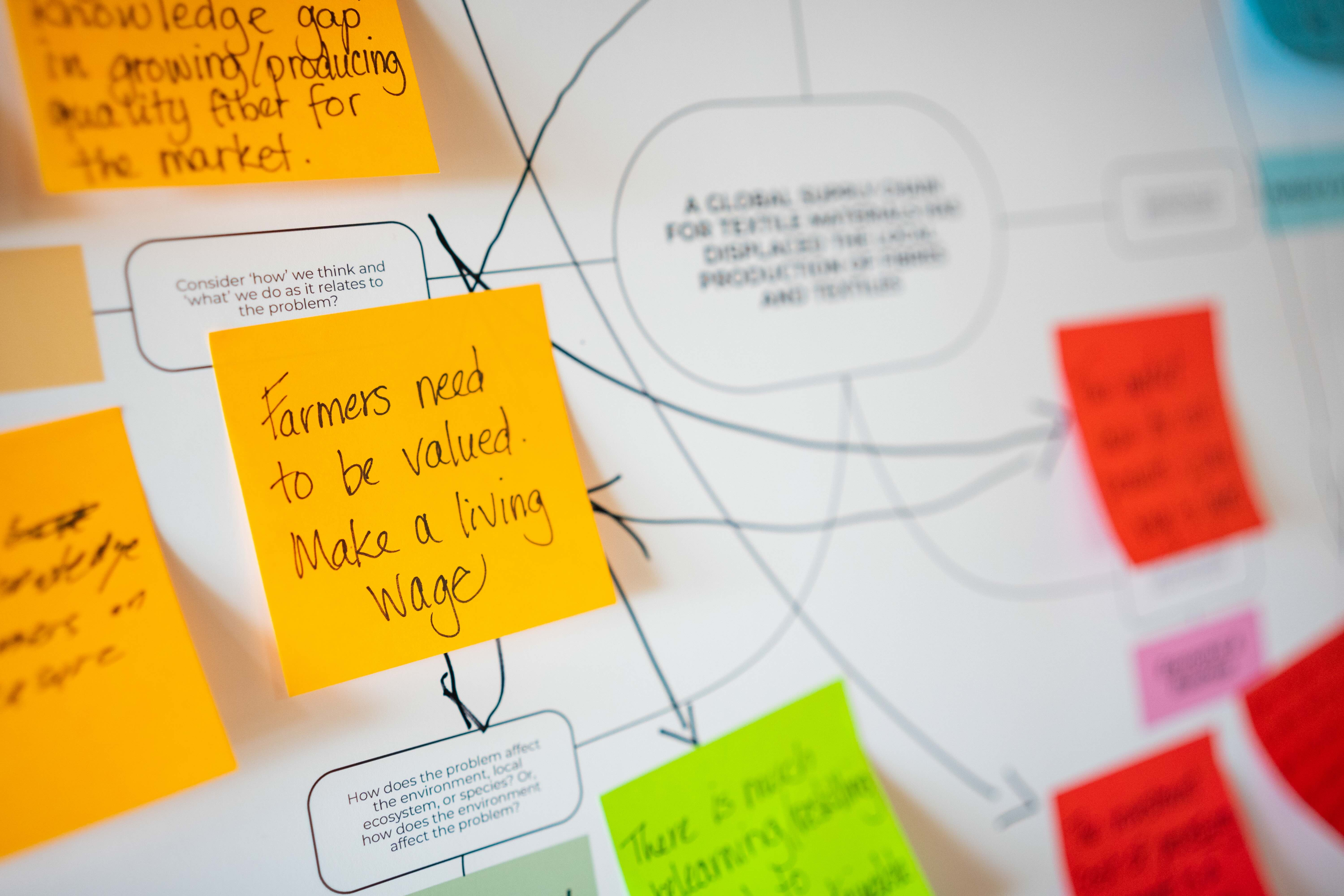
This project views the challenges of carrying out local fibre production in the face of fast fashion and a global textile system as a wicked problem that is having an impact on knowledge retention, cultural expression, technological innovation, and economic development at a regional scale. Thus, our research team has defined the wicked problem:

A global supply chain for textile materials has displaced the local production of fibres and textiles.

Methodology

Since 2023, the Flaxmobile and Flax Fibre to Fabric projects have been carrying out a series of steps for addressing wicked problems defined by Transition Design. These steps involve community engagement sessions and desk-based research. By the completion of the Flax Fibre to Fabric project in April 2028, each of these steps will be completed, and research results will be published for stakeholders through the project website.

Transition Design identifies steps for addressing wicked problems by:

  1. Developing a comprehensive understanding of how the wicked problem manifests across societal sectors
  2. Identifying synergies and tensions among stakeholder groups
  3. Mapping the historical evolution of the wicked problem
  4. Developing long-term future visions for the resolution of the problem
  5. Developing a set of interventions that can be carried out across multiple societal sectors to resolve the wicked problem

Community Engagement Sessions

Between December 2023 and May 2024, three community engagement sessions took place across Nova Scotia. Groups of people working along the local textile supply chain who had direct experience with the wicked problem were invited to participate. These included farmers, shearers and fibre processors, textile craftspeople, natural dye specialists, yarn and fabric stores, sustainable fashion companies, museum and cultural heritage centres, community and economic development officers, and researchers in agriculture, economics, and material culture.

Data gathered from community engagement sessions encompassed feedback from over eighty participants across eleven community groups. Over a period of eight months, the research team compiled and analyzed the data to define emergent themes and create system maps.

This data is being integrated into the Flax Fibre to Fabric Project and applied to current and future research activities. Additional community engagement sessions are planned for 2027 to develop a long-term future vision for the resolution of the wicked problem, and a series of interventions that can be carried out across multiple societal sectors, at multiple levels of scale.

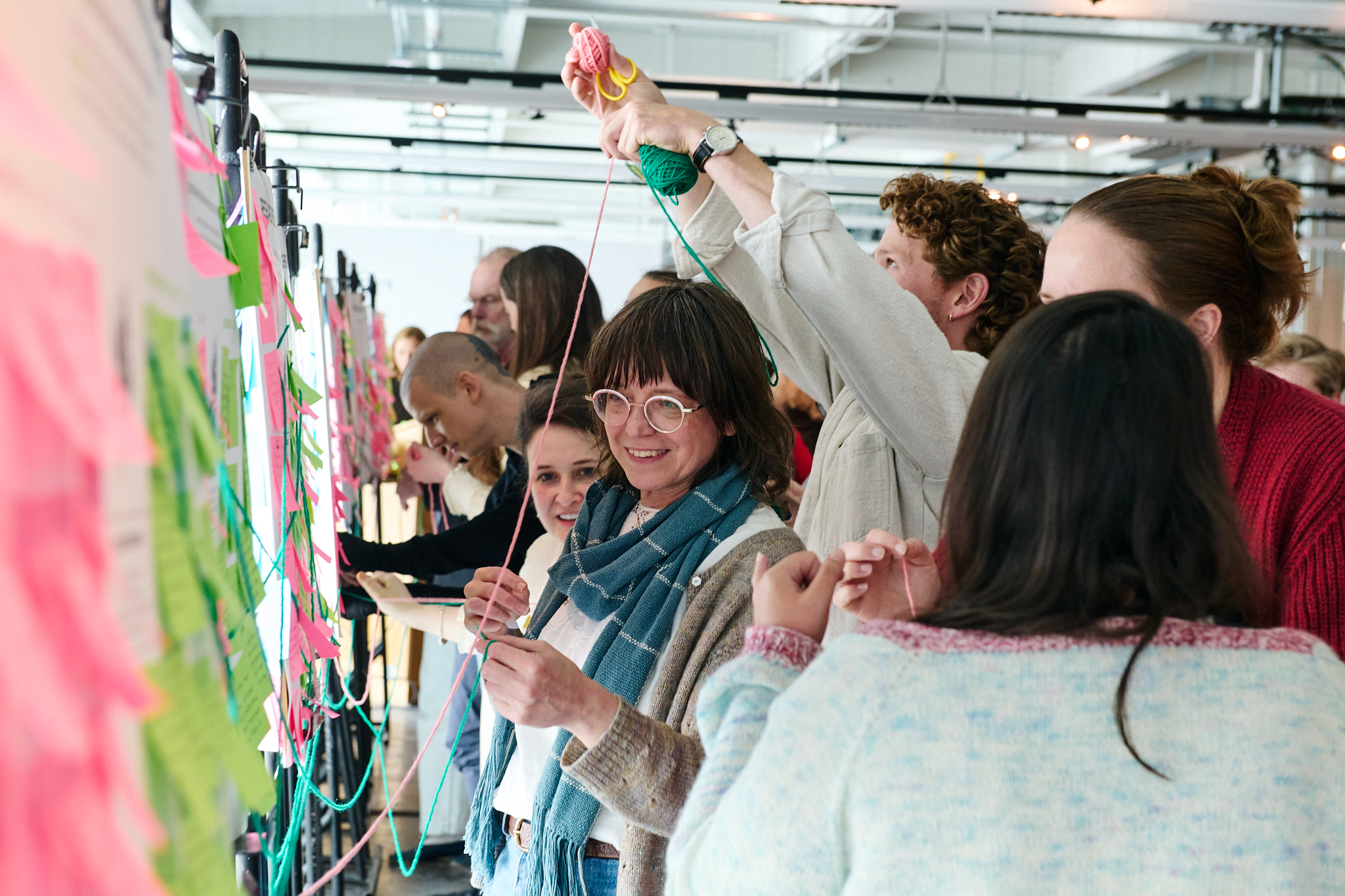
Participants connecting ideas at a community engagement session

Ongoing Research Activities

Historical Research

Transition Design argues that researchers and designers must draw radically large frames around a problem in both space and time. The Flax Fibre to Fabric team is currently working to map the historical evolution of the wicked problem to understand how it evolved and became entrenched.

Researchers are conducting primary (archival) and secondary research, exploring social, technological, economic, environmental and political themes related to the wicked problem. These themes are being mapped by studying events occurring at multiple levels of scale, and by examining early material culture, the influence of the Trans-Atlantic slave trade on U.S. cotton farming, the proliferation and decline of domestic textile production, innovations in textile technology, and the rise of fast fashion.

This study will be published in August 2026.

Community Engagement Mapping

Transition Design argues that researchers and designers must draw radically large frames around a problem in both space and time. The Flax Fibre to Fabric team is currently working to map the historical evolution of the wicked problem to understand how it evolved and became entrenched.

Researchers are conducting primary (archival) and secondary research, exploring social, technological, economic, environmental and political themes related to the wicked problem. These themes are being mapped by studying events occurring at multiple levels of scale, and by examining early material culture, the influence of the Trans-Atlantic slave trade on U.S. cotton farming, the proliferation and decline of domestic textile production, innovations in textile technology, and the rise of fast fashion.

This study will be published in August 2026.

Aggregated Stakeholder Problem Map

Transition Design argues that researchers and designers must draw radically large frames around a problem in both space and time. The Flax Fibre to Fabric team is currently working to map the historical evolution of the wicked problem to understand how it evolved and became entrenched.

Researchers are conducting primary (archival) and secondary research, exploring social, technological, economic, environmental and political themes related to the wicked problem. These themes are being mapped by studying events occurring at multiple levels of scale, and by examining early material culture, the influence of the Trans-Atlantic slave trade on U.S. cotton farming, the proliferation and decline of domestic textile production, innovations in textile technology, and the rise of fast fashion.

This study will be published in August 2026.

Research Result

Historical Analysis

This public facing Miro board maps the local and global evolution of the wicked problem from 1750 to present day.

Sep

Community Engagement Mapping

This PDF document provides a text-based description of the thirty-three themes illustrated on the MIRO board.

View in Miro

Aggregated Stakeholder Problem Map

This public facing Miro board uses stakeholder contributions to map the wicked problem across societal sectors.

Next Year