Background & Context
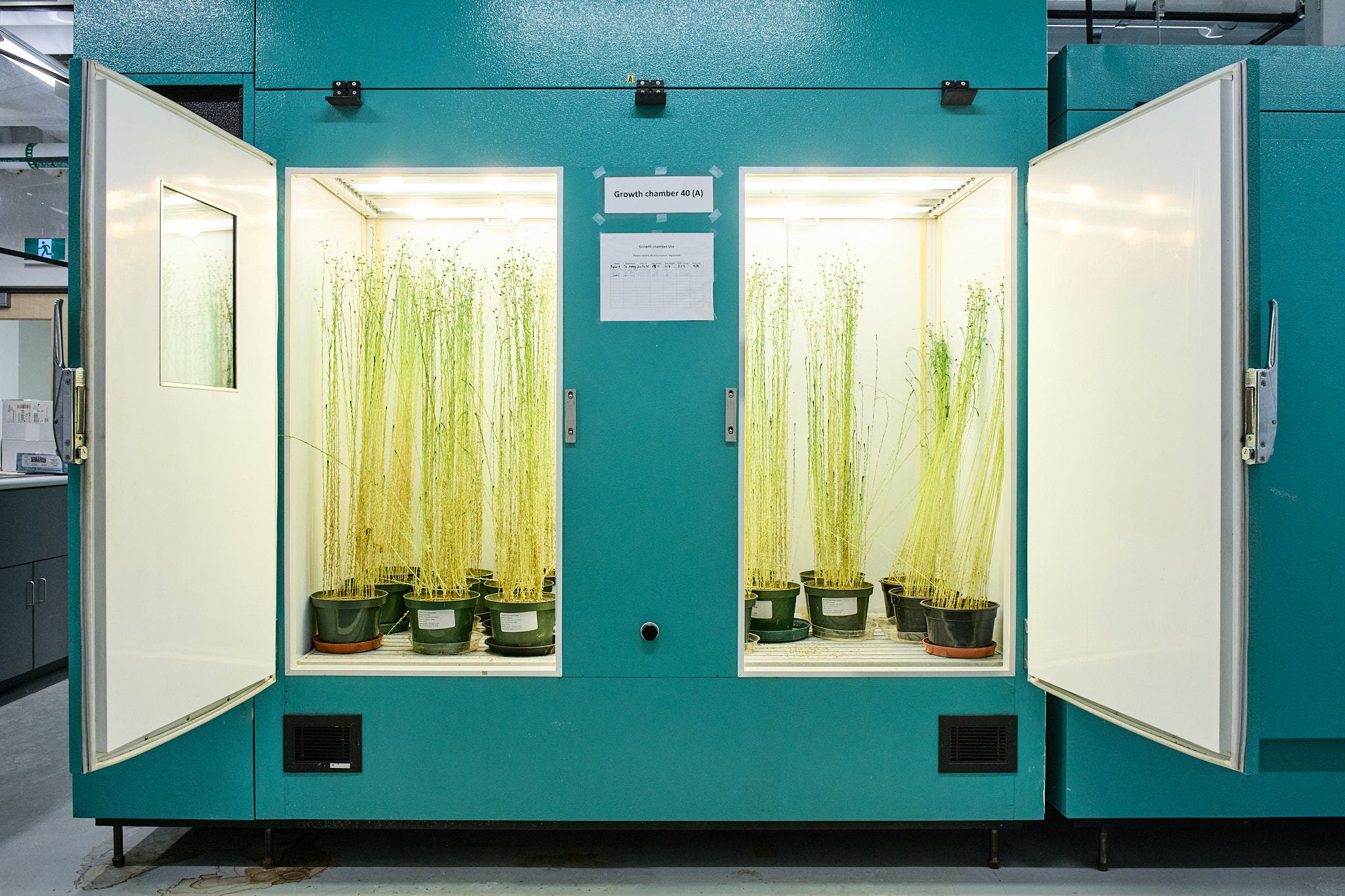
Fibre flax is a crop that grows best in moderate temperatures but is sensitive to heat and dry conditions. As heat stress becomes more common, there is growing interest in simple and effective ways to help crops tolerate these stressors. One of the most vulnerable stages is the stem elongation phase, which occurs shortly after early leaf development. During this stage, the plant grows rapidly in height as the stem lengthens and strengthens, laying the foundation for fibre formation. Climate conditions and rainfall during this period strongly influence fibre yield and quality. Growth chambers allow temperature and moisture levels to be controlled, making it possible to study how plants respond to short periods of heat and drought.
Methodology
Lab and growth chamber research first examined how much heat flax plants could tolerate, and at what point stress begins to affect plant performance. Plants were exposed to different temperature levels and durations to determine heat stress limits and critical thresholds, including both optimal and high temperatures, along with two moisture levels: well-watered (80% field capacity) and dry (40% field capacity).
Short-term heat stress was applied to simulate heat waves. Heat stress was also applied at different growth stages, such as stem elongation and flowering, to assess stage-specific sensitivity. Plants exposed to heat during early growth were followed to maturity to evaluate the effect on fibre yield and quality.
Plant response was measured by tracking photosynthesis, stress indicators (such as leaf damage and protective compounds), and overall plant health before, during, and after applied stress. Visible traits such as plant height and stem thickness were recorded to understand how growth was affected by lab variables.
Key Findings
The overarching goal of growth chamber research is to identify temperature and climate conditions for growing flax in the region under changing and variable weather conditions.
Trials began in November 2025, and early observations show that plants exposed to high temperatures and dry conditions tend to be shorter and have thinner stems compared to those grown under optimal conditions. Further testing is underway to better understand the chemical changes of plants undergoing stress, including measurements related to oxidative stress, cell damage, and natural protective compounds. These results will help explain why these visible changes occur.